The Seven Classical Hands
Thinking Hands — Spatulate Hand, Philosophic Hand
Spatulate Hand
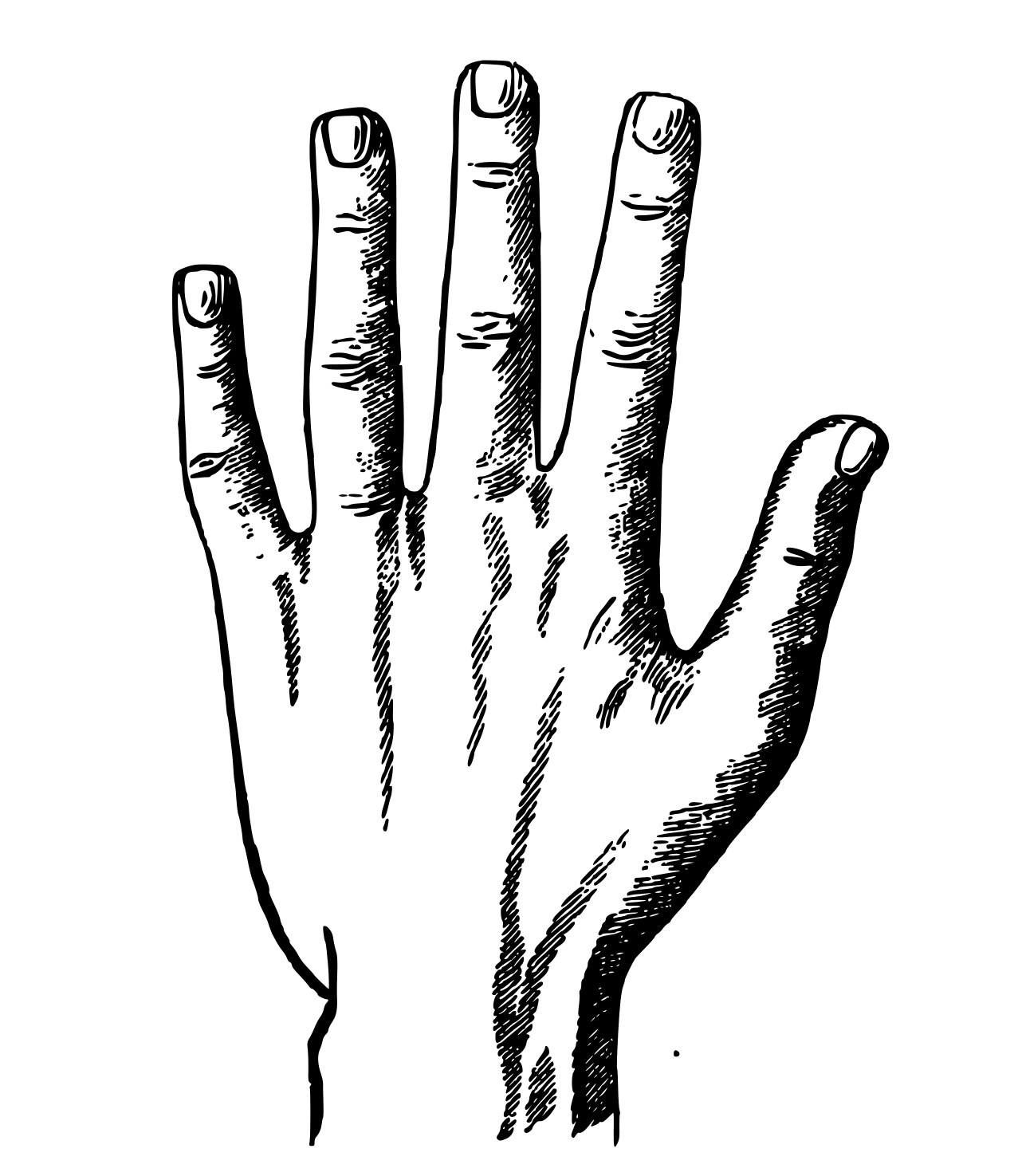
A hand with chisel- or spatula-shaped fingertips and nails — restless, energetic, independent, and drawn to action over reflection; common among explorers, inventors, and engineers.
The Spatulate hand is named for its fingertip and nail shape — broad and chisel-like, like a spatula. A hard, firm Spatulate hand belongs to someone restless and easily roused, but with real enthusiasm and capacity for work. A soft, fleshy Spatulate hand belongs to someone whimsical and unsteady — enthusiastic when starting something, but the enthusiasm doesn't last. Overall, the type is marked by a strong love of action, individuality, enthusiasm, independence, self-confidence, and restlessness. The source finds it common among sailors, world-travelers, discoverers, engineers, and mechanics — and, among those seen by others as unconventional or whimsical (singers, preachers, actors), specifically among the ones who turn out to be genuine trailblazers: originators of a new path, a new idea, a new school of thought. Where the palm is wider near the fingers than near the wrist (chisel-shaped), practical, worldly capability shows even more strongly — inventors of this type produce large-scale things: factories, railways, ships.
Spotting it: Fingertips and nails broad and chisel- or spatula-shaped rather than square, pointed, or conic. Palm may be hard/firm or soft/fleshy — see interpretations for how that changes the reading.
From Hastarekha-Bichar (1935) — Spatulate Hand
One aside in the source text (1935) is worth recording: listing the callings where Spatulate hands turn up, it groups singers, preachers and actors together as people “যাহাদিগকে আমরা সৃষ্টিছাড়া, খামখেয়ালী বলিয়া মনে করি” — whom we consider odd or whimsical. It is mild next to what the book says about the Elementary or Psychic hands, and it is not a judgement of the hand itself, but it is a period attitude toward performing professions rather than an observation about hands, so it stays here rather than in the description above. The rest of this chapter is unusually free of that framing: the source treats the Spatulate hand as energetic, independent and self-confident, and names travellers, inventors and engineers without any comment on their standing.
Historical record of the source text, not something this course teaches or the free reading uses.
Philosophic Hand
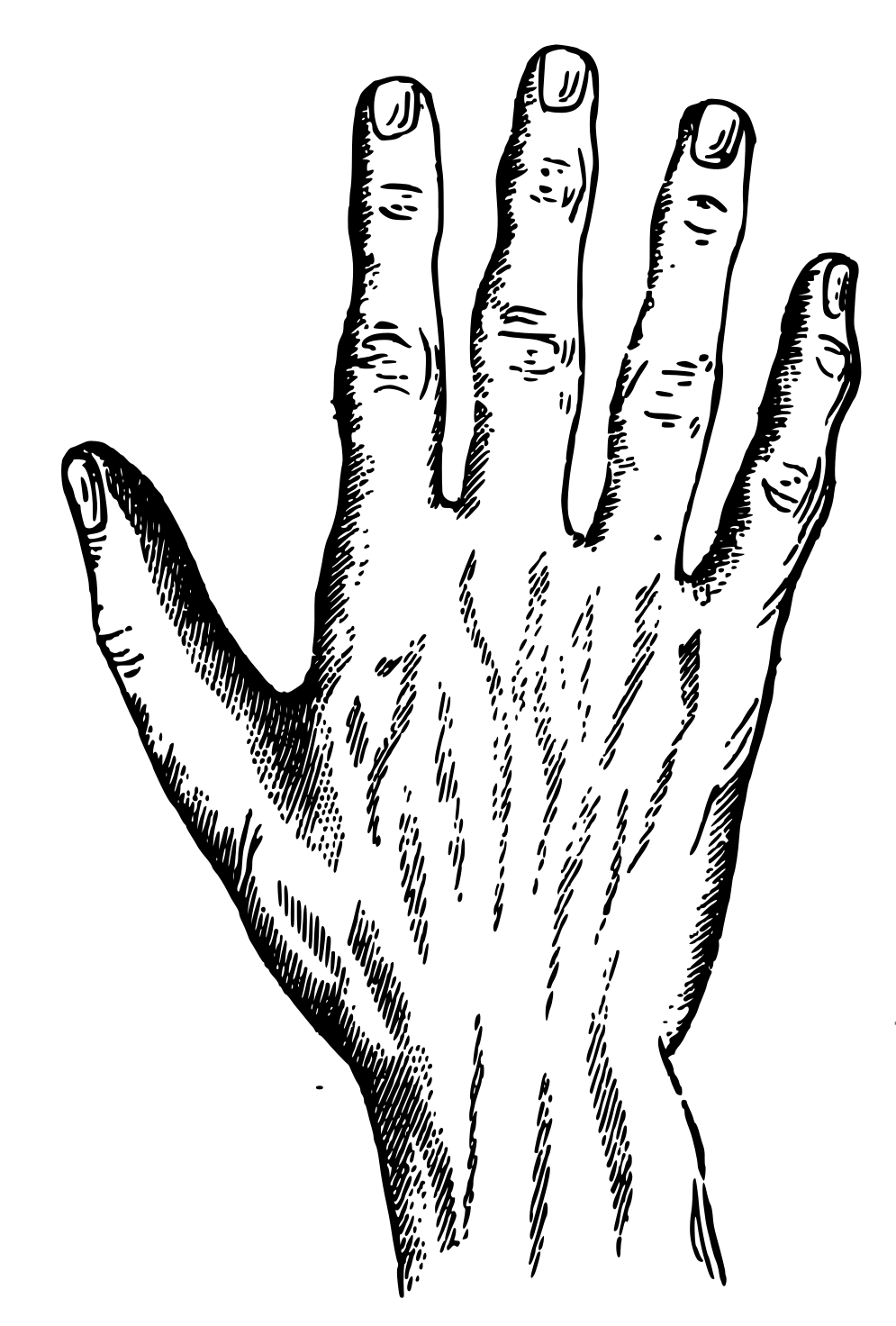
A long, bony, knotty-fingered hand belonging to quiet, deeply reflective people drawn to abstract knowledge over money or small talk — the source names Tennyson and Cardinal Newman as examples.
The Philosophic hand is easy to recognize: long and bony in structure, with knotty, jointed fingers. Nails are long, shaped somewhere between square and artistic. The thumb is large, its first and second joints roughly equal in length. The source notes it was common in India among Brahmins and yogis, and names the English poet Tennyson and Cardinal Newman as having this hand shape. Its owners are thoughtful, quiet, and not talkative; the prominent finger joints go with deep, careful thinking — they're cautious even about small matters, and independent-minded relative to most people, which gives them real inward pride. They don't easily forget being wronged. Their patience is close to boundless, and they don't lose it waiting for the right opportunity — so when the moment comes, they use it well. Their mind is inquisitive and analytical, examining every matter thoroughly rather than accepting it at face value. The Philosophic hand isn't especially good at earning money, but knowledge-seeking is its whole point: such people are happier spending a life in intellectual pursuit than in the pursuit of wealth. Their subjects are the difficult ones — philosophy, theology, aesthetics, psychology — uncovering the deeper truth in each. Their engagement with these subjects runs so high and so far into the abstract that ordinary people often can't follow it.
Spotting it: Hand long and bony. Fingers knotty/jointed. Nails long, between square and artistic in shape. Thumb large with roughly equal first and second phalanges.
From Hastarekha-Bichar (1935) — Philosophic Hand
The source text (1935) locates this hand by caste and religious vocation: it says the Philosophic hand is found abundantly among Brahmins and yogis in India, alongside English examples (the poet Tennyson, Cardinal Newman). Tying a hand shape — and the intellect and temperament read from it — to a caste is a claim about inherited social rank, and it belongs to the period the book was written in rather than to this course, which reads hand shape from the hand in front of it and nothing else. The character description above (reflective, reserved, patient, drawn to philosophy and religious enquiry over money) is the book's own and is kept; the caste attribution is recorded here instead, as a labelled historical artifact.
Question 1 of 2
Broad, chisel-shaped fingertips and nails, restlessness, and a strong pull toward action are the mark of which classical hand type?