The Seven Classical Hands
Feeling Hands — Artistic Hand, Psychic Hand, Mixed Hand
Artistic Hand
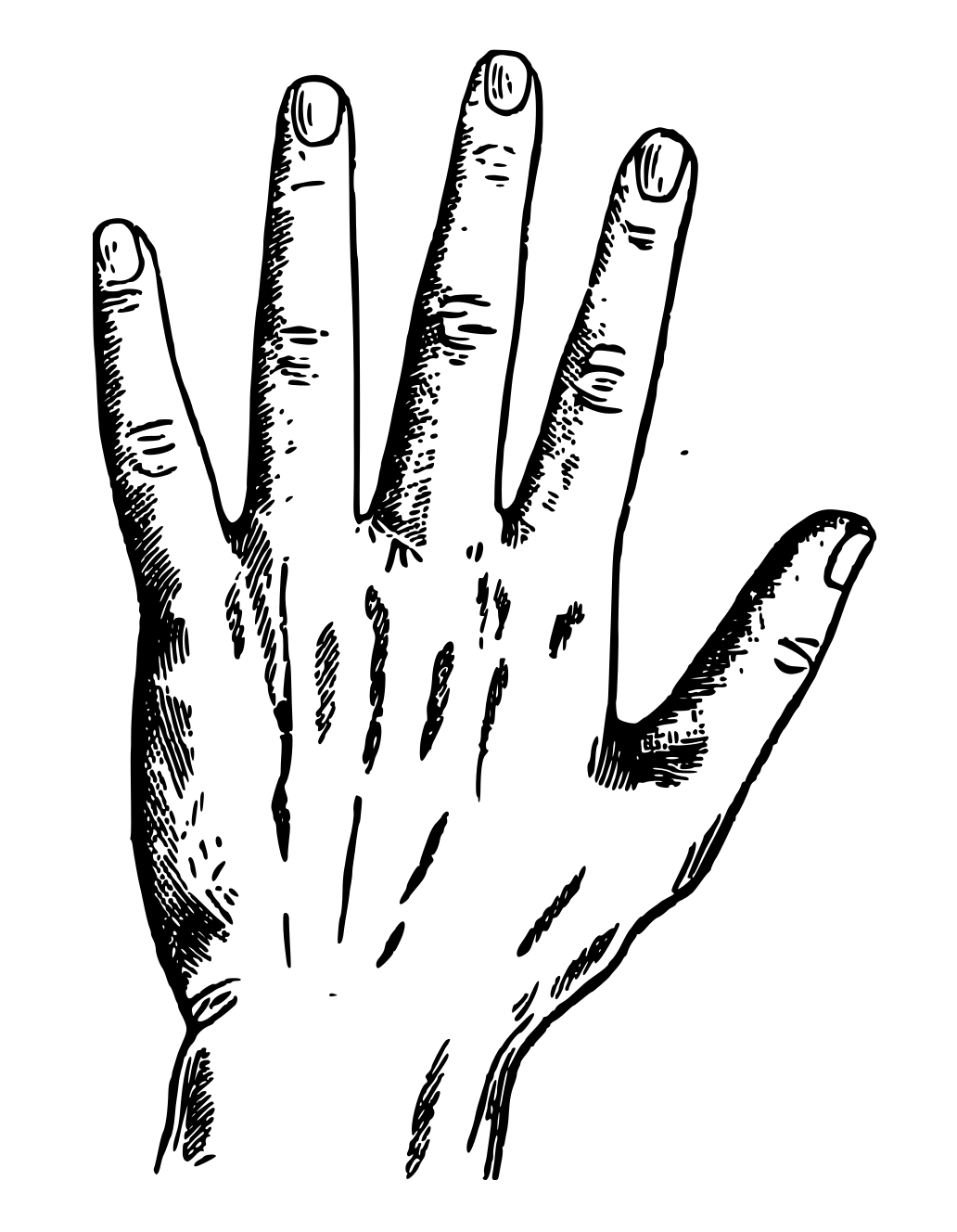
A medium-sized, soft, full-palmed hand tapering like a banana blossom — emotionally driven, art-loving, quick-witted but impatient, moved easily to joy or despair by small things.
The Artistic hand is medium-sized with a soft, full palm shaped somewhat like a banana blossom — full near the fingers, narrowing toward the wrist. Fingers are smooth, without prominent knuckles. The source places this shape as common in Persia, Greece, Italy, and Ireland, and occasionally among aristocratic families locally. Its defining trait is emotional sensitivity — feeling and inspiration over practicality; it isn't as money-making as the Square or Spatulate hand, but the world of imagination, of otherworldly beauty, of a poet's feeling, stays permanently open to it. Its owners have sharp intellect and grasp things quickly, but their patience is so limited that they rarely carry a task through to the end. They're remarkably persuasive talkers, easily captivating an audience on almost any subject — but the depth behind the talk tends to be shallow; they work from momentary inspiration rather than careful, considered judgment. Small causes make them angry or sad, but the feeling passes quickly. Surrounding events and the people close to them have real influence on their mood. Their nature is generous and sympathetic — but for their own comfort, they can act quite selfishly. Because their mood swings so easily on small things, this type often struggles to gain a durable practical advantage in the real world; they can appreciate beauty and craft deeply, but struggle to make a living from it as an artist — unless the palm has some added firmness (see interpretations).
Spotting it: Palm medium-sized, soft and full, tapering toward the wrist like a banana blossom. Fingers smooth, without prominent knuckles. Nails relatively long. See interpretations for how palm firmness, fingertip shape, and thumb size modify the reading.
From Hastarekha-Bichar (1935) — Artistic Hand
The source text (1935) places this hand geographically and by lineage: it says the Artistic hand is commonly seen in Persia, Greece, Italy and Ireland, and that in India it appears occasionally in “আর্য সন্ত্রান্ত” — Aryan aristocratic — families. It then attaches traits to that description, calling such people pleasure-loving and averse to labour, quick to grasp things but shallow in knowledge, and capable of acting selfishly for their own comfort. Reading temperament from nationality and high birth is a claim of the book's period, not of this course. The observational parts of the description above — soft full palm, tapering fingers, emotional responsiveness, persuasive speech, short-lived enthusiasm — are the book's own and are kept; the ethnic and hereditary framing is recorded here as a labelled historical artifact.
Historical record of the source text, not something this course teaches or the free reading uses.
Psychic Hand
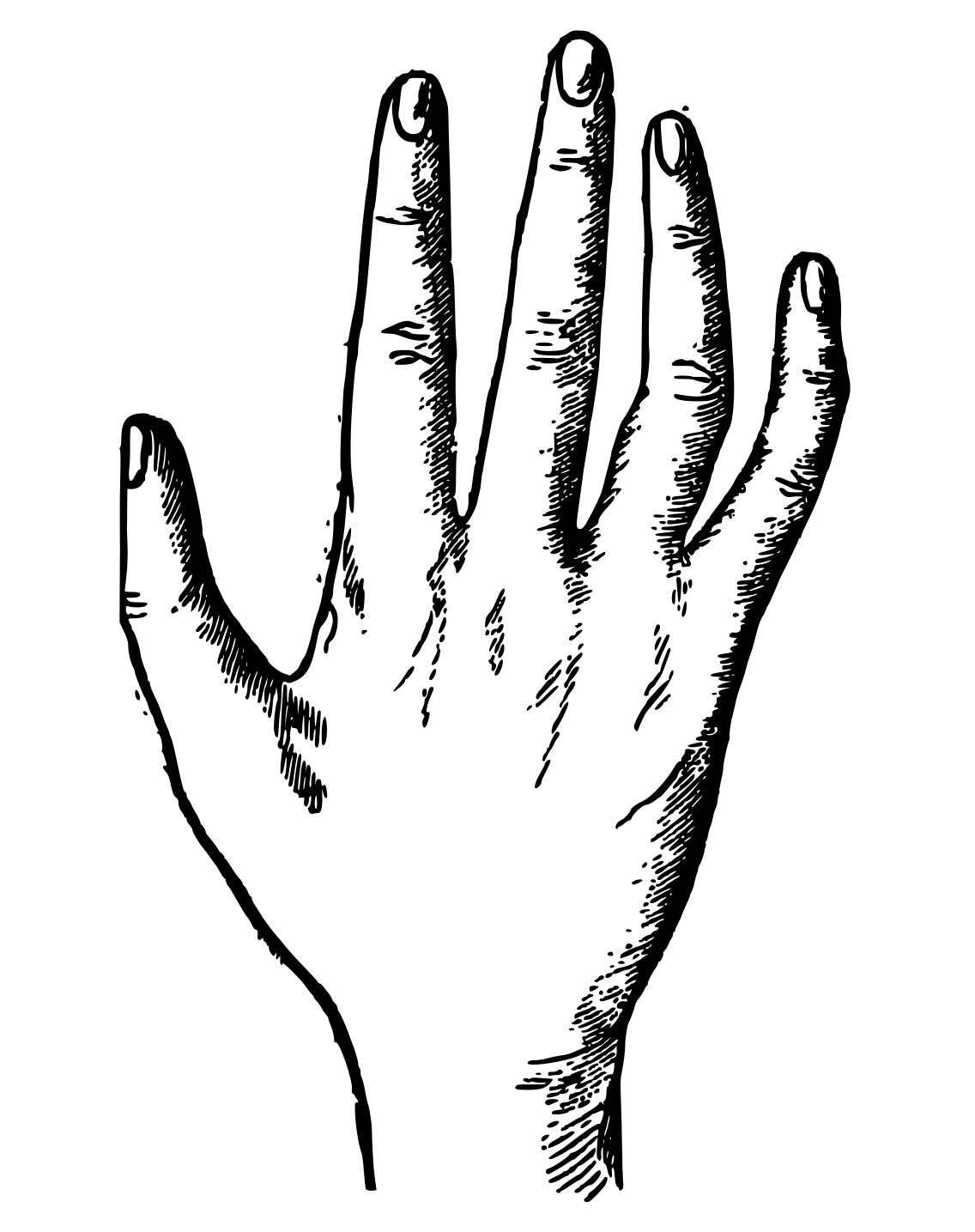
The most visually striking of the seven classical hands — long, fine, knuckle-free fingers tapering like a champak flower bud — belonging to gentle, idealistic people with strong intuition but little practical footing.
The Psychic hand is closely related to the Artistic hand, so the distinction matters: where the Artistic palm is medium-sized with fingers gradually fining toward the tip, the Psychic hand's whole structure is long and slender — yet this length takes nothing away from its beauty. The fingers are slim, gradually narrowing like a champak flower bud, genuinely the most beautiful of the seven types to look at; the palm is neither long nor especially broad, the fingers are free of prominent knuckles, and the whole hand — including a small, well-formed thumb — is compact and graceful relative to the body. Its owners are given to imagination and idealism well past the ordinary — worshippers of beauty in every form, gentle-natured, and completely, openly trusting of anyone who once earns their affection, hiding nothing from them. What they lack is practical strength: they're poorly suited to life's ordinary struggles, and don't really know how to operate as a person of practical judgment in the world. They have little sense of discipline, authority, or the value of time, and others can influence them easily — even against their own wishes, they often can't resist following someone else's lead. Their mind naturally turns toward spirituality and devotion; a genuine spiritual impulse lives in them, but they lack the capacity to realize it fully or bring it out in a working life — in religious matters they're drawn to outward display: chanting, singing, ceremony, more than to reasoned inquiry into truth, which doesn't interest them at all. Life feels to them like a deep wonder and mystery, and anything otherworldly or seemingly magical overwhelms their attention. Their single greatest gift is intuition — strong enough, the source says, that they can sense things before they happen, in a way that can astonish others; because of this, they can make genuinely gifted clairvoyants. They're also described as excessively self-conscious, prone to feeling that their life has gone to waste and unsuited to any real purpose — a thought that, at its most intense, leaves them dispirited and melancholy for stretches at a time.
Spotting it: Whole hand long and slender/fine (not just the fingers), with a graceful, elongated look overall. Fingers thin, tapering, knuckle-free, likened in the source to a champak flower bud. Palm neither long nor especially broad. Thumb small and well-formed. Distinguish from the Artistic hand by the elongation of the whole hand, not just fine fingertips on a medium palm.
Mixed Hand
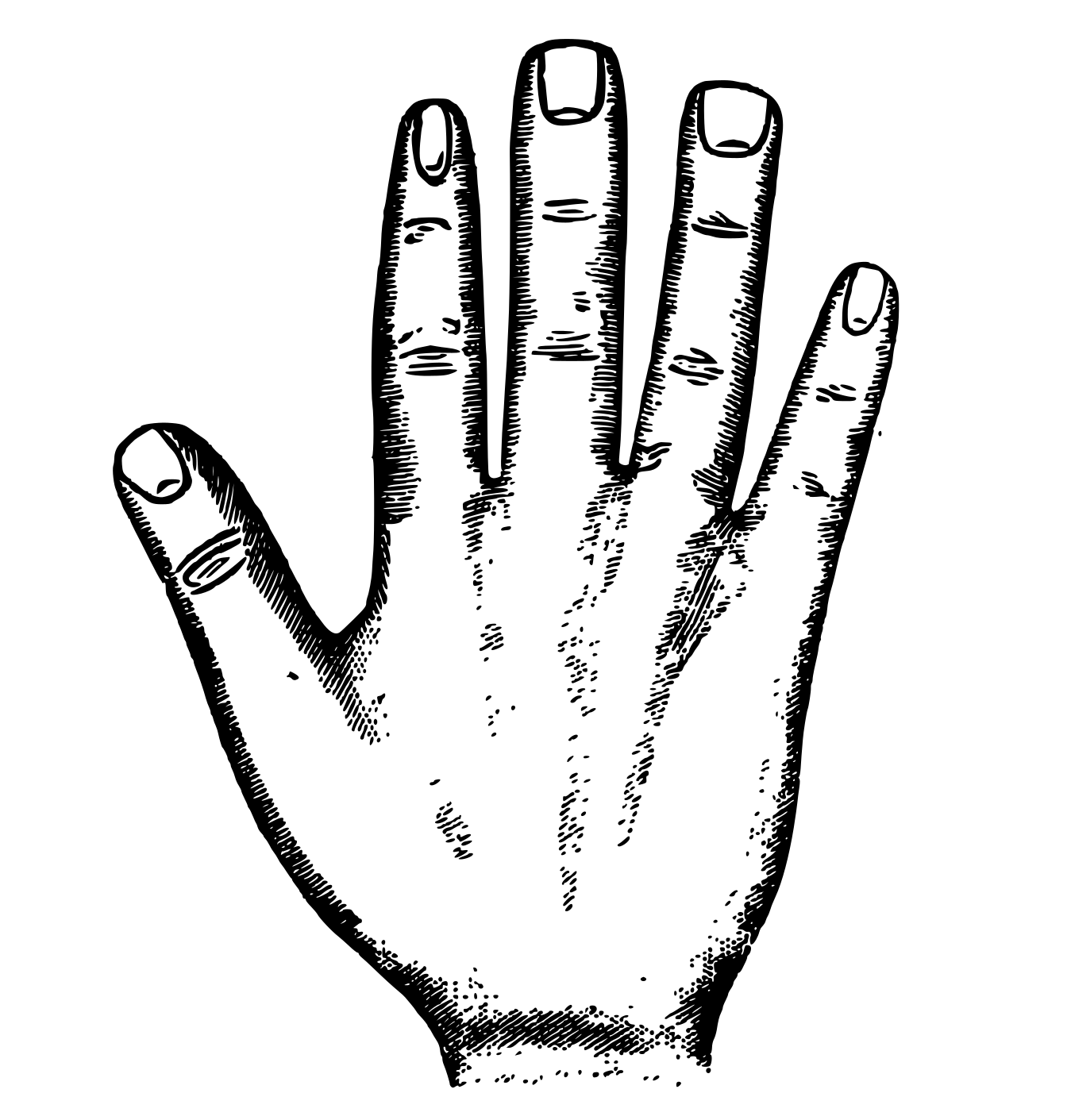
A hand whose fingers don't agree on a single type — some square, some spatulate, some philosophic — belonging to adaptable, quick people who show some skill at almost everything but rarely master one thing.
A hand that doesn't fit cleanly into the Square, Spatulate, Philosophic, Artistic, or Psychic categories is generally called Mixed — each finger on such a hand tends toward a different type: one pointed, one square or spatulate, another philosophic. Its owner can show some proficiency in almost anything, and their nature is changeable to match — they adapt to any circumstance and get along with nearly everyone. They're notably clever, but their mind doesn't settle in one direction. They can speak reasonably well on science, literature, or almost any subject, and can turn a hand to music, painting, mechanical work, or scholarship — without excelling permanently at any single one. Where they do show real strength is anything demanding tact, judgment, and diplomatic cunning, which makes many of this type well suited to politics. Their defining trait, above all, is natural adaptability across the board, the capacity to adjust to any situation, and a changeable mind — because of that adaptability, no task looks too difficult to attempt. Because they can adjust to any circumstance, they also tend not to be badly shaken by either good or bad fortune, and are capable of both physical and mental work. Two rules the source gives for reading a Mixed hand specifically: first, if the head line is unusually clear and stronger than the other lines, the person tends to focus their varied ability on whichever field they're genuinely best at, using their other skills in a supporting role rather than spreading evenly across all of them. Second, if the fingers are Mixed-type but the palm itself clearly reads as one of the other types (Artistic, Philosophic, Square, etc.), the person's mind isn't especially changeable despite the mixed fingers, and they can typically achieve more concentrated success than a truly pure Mixed hand — though which particular field depends on the palm's other markings, not on the hand type alone.
Spotting it: Fingers each lean toward a different classical type rather than agreeing on one (e.g. one pointed, one square, one philosophic). To read which sub-case applies, check whether the head line is unusually dominant, and whether the palm itself (independent of the fingers) reads as a single other type — see interpretations.
Question 1 of 3
Quick wit, strong emotion, persuasive speech, but limited patience to finish what's started — which classical hand type does this describe?